


Frameless Windows (Fixed Frame): Minimalism and Maximum Light in Modern Architecture
Picture a living room where the wall simply... ends. Where glass flows seamlessly into space without any visible barriers, and the boundary between interior and garden vanishes in an almost magical way. This is exactly what frameless windows promise – a solution that redefines how we perceive and design glazing in contemporary architecture.
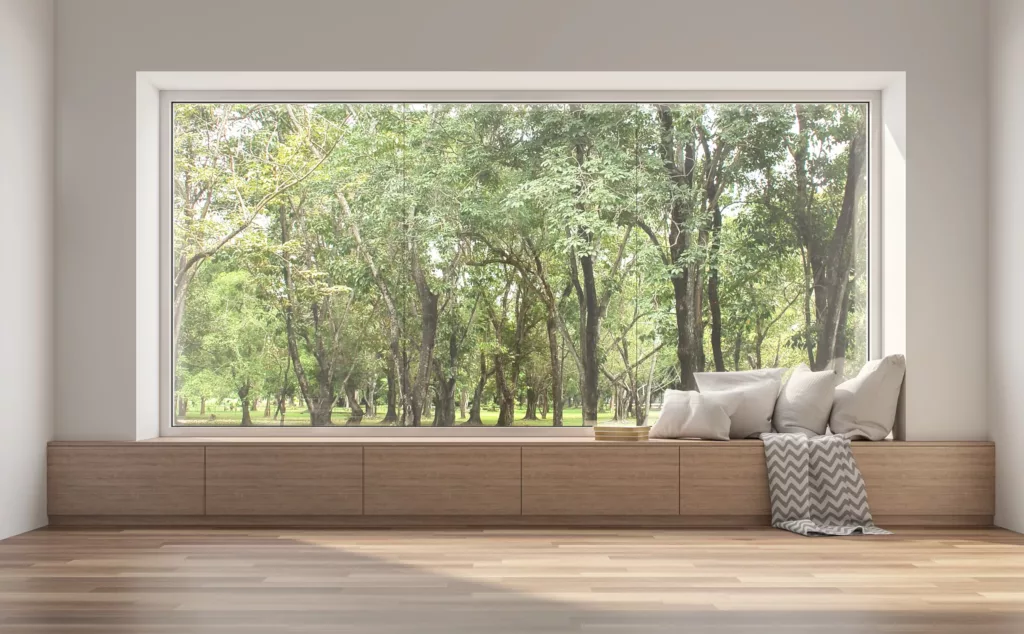
Imagine a Living Room Where the Boundary Between Interior and Garden Disappears
In 2025, minimalism has ceased to be merely a design trend – it has become a life philosophy. Architects increasingly turn to solutions that maximise access to natural light whilst eliminating unnecessary visual details. Fixed frame windows fit perfectly into this philosophy, offering uninterrupted panoramas whilst maintaining the highest energy-efficient parameters.
This technology, initially reserved for the most avant-garde projects, is gradually becoming accessible to a broader range of investors. Systems such as Yawal Moreview and Aliplast Max Light demonstrate how advanced engineering can serve simple human needs – more light, more space, more harmony with the environment.
But frameless windows are more than just aesthetics. They represent an intelligent investment in living comfort that can significantly impact property values in the premium segment.
What Are Frameless Windows? Technical Definition
Fixed Frame vs Minimal Frame Systems
Frameless windows is a marketing term that actually encompasses two main categories of technical solutions. Fixed frame windows are constructions without opening capabilities, where the frame is completely concealed within the building structure. Minimal frame systems, on the other hand, are functional windows with profiles reduced to just 19-50mm, compared to standard 60-80mm profiles.
The key difference lies in load transfer methods. In traditional windows, the frame performs the load-bearing function, whilst in frameless systems this role shifts to structural glazing – an advanced technology where silicone adhesives become an integral structural element.
Structural Glazing – The Heart of the Technology
Structural glazing is a process where glass panels are bonded to the load-bearing structure using specialist structural silicone adhesives. This eliminates the need for external pressure bars and cover strips, creating a perfectly smooth glazing surface.
Categories of Frameless Systems
Curtain wall vs window wall systems differ in their mounting methods – the former “hang” from the structure like a curtain, whilst the latter are set between floor slabs. Corner systems allow glass panels to connect at 90° angles without visible mullions, creating spectacular “glass corner” effects.
The main categories include:
- Fixed frame windows – constructions without opening capability
- Minimal frame systems – functional windows with minimal profiles
- Corner systems – corners without mullions
- Structural glazing – complete structural glazing for facades
Why Are Frameless Windows Conquering the Market?
Architectural Trends Driving Demand
Scandinavian and Japanese minimalism focuses on maximising natural light whilst maintaining simplicity of form. Frameless windows fit perfectly into this philosophy, offering unobstructed views without disturbing visual elements.
Industrial lofts and converted spaces provide the natural environment for frameless windows, referencing original industrial glazing whilst utilising contemporary energy-efficient technologies. Large-format glazing from floor to ceiling with minimal divisions characterises this style.
Bauhaus revival returns in premium projects, where clean geometry and functionalism combine with the latest building technologies. Frameless windows become an integral part of the building’s form, emphasising its architectural character.
Space Psychology and User Comfort
The “vanishing boundary” effect between interior and garden has documented impacts on residents’ wellbeing. Research confirms that maximising natural light improves psychological comfort and reduces artificial lighting requirements by up to 30-40%.
In dense urban centres, frameless windows create the “lebensraum” effect – breathing space that responds to the fundamental needs of residents in modern, often crowded cities.
“Quiet Luxury” in Premium Architecture
The “Quiet Luxury” trend prioritises the highest quality and craftsmanship over ostentatious displays of wealth. Frameless windows fit perfectly into this philosophy – their value doesn’t lie in decorative, visible frames, but in sophisticated, hidden engineering.
Luxury becomes the uninterrupted view, quality of living space, and sense of unity with nature. This represents a conscious choice by premium investors, reflecting a shift towards investing in durable, valuable architectural elements rather than transient decorative features.
The Technology Behind Frameless Windows
Structural Glazing – Precision Engineering
The heart of the technology comprises specialist structural glazing silicones, such as those from the Sikasil® SG series, which create flexible yet extremely durable connections between glass and adapter profiles. These adhesives must exhibit not only enormous strength but also lasting resistance to UV radiation, ageing, moisture, and extreme temperature fluctuations from -50°C to +150°C.
Stepped insulating glass units (stepped IGU) are a key element of frameless systems. In these units, the external glass panel is larger than the internal ones, allowing the concealment of unit edges and spacer bars, creating a perfectly smooth external surface.
Available Systems in the International Market
Yawal Moreview – Maximum Transparency Technology
Yawal Moreview reprezentuje szczyt możliwości w zakresie okien bezramowych. System charakteryzuje się:
- Minimum mullion width: just 27mm
- Maximum sash height: up to 4 metres (13 feet)
- Heat transfer coefficient: Uw from 0.7 W/(m²K)
- Unique features: fully glazed corners, pocket doors, concealed automation
Yawal Steelview – Industrial Minimalism
Yawal Steelview oferuje najwęższe możliwe linie profili, imitując wygląd szlachetnej stali. System zapewnia parametry pasywne (Uw od 0,80 W/m²K) przy zachowaniu surowego, industrialnego charakteru. Idealne rozwiązanie dla loftów i przestrzeni w stylu przemysłowym.
Aliplast Max Light – Glass Wall Effect
Aliplast Max Light to system, gdzie profile są zredukowane do absolutnego minimum, niemal znikając z pola widzenia. Pozwala na tworzenie wnętrz dosłownie zalanych naturalnym światłem przy zachowaniu funkcjonalności i parametrów energooszczędnych.
Aliplast Genesis 90 – Large-Scale Glazing
Genesis 90 łączy spektakularny design z najwyższą izolacyjnością. Jego wytrzymałość pozwala na konstruowanie imponujących, wielkoformatowych przeszkleń przy zachowaniu parametrów cieplnych wymaganych w domach pasywnych.
Technical Challenges and Solutions
Mechanical strength of large glass panels requires the use of toughened or laminated glass with enhanced strength parameters. Structural systems must account for wind loads, thermal expansion, and vibrations.
Sealing with minimal profiles is achieved through advanced sealing systems and precise installation. The key is applying so-called “warm edge” installation, which eliminates thermal bridges even in the most demanding constructions.
Ventilation issues in fixed frames require alternative mechanical ventilation systems or integration with smart building systems that automatically regulate air quality. Large, non-opening glass surfaces require special attention in building ventilation design.
Practical Applications of Frameless Windows
Where They Perform Best
Passive and energy-efficient houses utilise frameless windows with parameters Uw ≤ 0.8 W/(m²K), simultaneously achieving maximum solar gains and minimum heat losses through advanced triple-glazing packages.
Lofts and industrial conversions use frameless windows to preserve industrial character whilst ensuring contemporary energy efficiency standards. Some systems achieve up to 98% transparency, eliminating optical barriers between interior and exterior.
Modern residential projects increasingly integrate mullion-free corner windows that maximise natural light access and create spectacular visual effects. Stepped glazing technology allows glass panels to connect at various angles, adapting solutions to individual architectural needs.
Conservatories and relaxation spaces utilise fixed frames to create a sense of unity with nature year-round. Large-format glazing enables maximum utilisation of solar gains during winter months.
Class A office buildings increasingly employ curtain wall systems with minimal divisions, creating prestigious office spaces with maximum natural light access.
Integration with Other Systems
Lift-and-slide doors (HST) in frameless systems can achieve impressive dimensions – up to 6.5m (21 feet) width with sash weights up to 1,200kg (2,645 lbs) with automatic operation. This enables the creation of monumental openings connecting interiors with terraces or gardens.
Automation and smart homes – modern systems can be equipped with automatic drives controlled via mobile applications, integrating with climate control and sun protection systems.
Practical Guidelines for Investors
Planning and Design
Early planning is crucial – the decision to use frameless windows must be made during the building design phase, in close collaboration between architect and structural engineer. The enormous weight of glazing packages (reaching hundreds of kilograms) requires appropriately strong lintels and supports.
Ventilation requirements for fixed frames are particularly important. According to building regulations, rooms with non-opening windows require constant fresh air supply – minimum 30 m³/h per person in public buildings. In practice, this means the necessity of mechanical ventilation with heat recovery.
Safety Aspects
Safety glass is mandatory in areas particularly vulnerable to impact. This can be toughened glass (which shatters into small, blunt pieces) or laminated glass, which remains intact after breakage thanks to PVB interlayer.
Glass thickness must be precisely selected by the engineer according to panel size to ensure adequate wind load resistance. For the largest glazing, packages up to 60-80mm (2.4-3.1 inches) thick may be required.
Key Selection Parameters
Heat transfer coefficient (Uw) – passive houses require levels ≤ 0.8 W/(m²K), with the best systems achieving 0.5-0.6 W/(m²K).
Acoustic insulation (Rw) – in dense urban developments, systems can offer noise reduction of 42-47 dB, ensuring complete interior silence.
Burglar resistance class (RC) – RC2 standard is recommended for large-format glazing, providing appropriate security levels.
The Future of Frameless Window Technology
Technological Trends
Smart glass – intelligent glass with electrically controlled transparency change is already commercially available. Integration with IoT systems will enable automatic adaptation of glass properties to weather conditions.
Advanced coatings – development of selective coating technologies allows even better utilisation of solar gains whilst providing overheating protection.
Photovoltaic integration – glazing with integrated photovoltaic cells can transform windows into building energy sources.
Regulations and Standards
Tightening energy efficiency standards beyond 2025 will favour high-performance systems. A reduction in required Uw coefficient to 0.8 W/(m²K) or lower is anticipated, placing frameless systems in a privileged position.
Urbanisation and densification increases the importance of maximising natural light in residential projects. Frameless windows become not only a prestigious solution but functionally necessary in increasingly dense urban centres.
Summary
Frameless windows are ceasing to be a niche architectural trend, becoming the standard in premium projects and a key element of modern energy-efficient construction. This isn’t merely about aesthetics, but a response to fundamental needs of contemporary life – more light, more space, better contact with nature.
This technology, initially available only for the most exclusive projects, is gradually becoming accessible through the development of systems such as Yawal Moreview, Steelview, and Aliplast Max Light. The key lies in selecting the appropriate system and professional execution that unlocks the full potential of this revolutionary technology.
In an era of dense cities and rising energy efficiency requirements, frameless windows offer a solution that combines the highest technical parameters with fundamental human needs. This represents an investment not only in architecture but in quality of life for years to come.


